
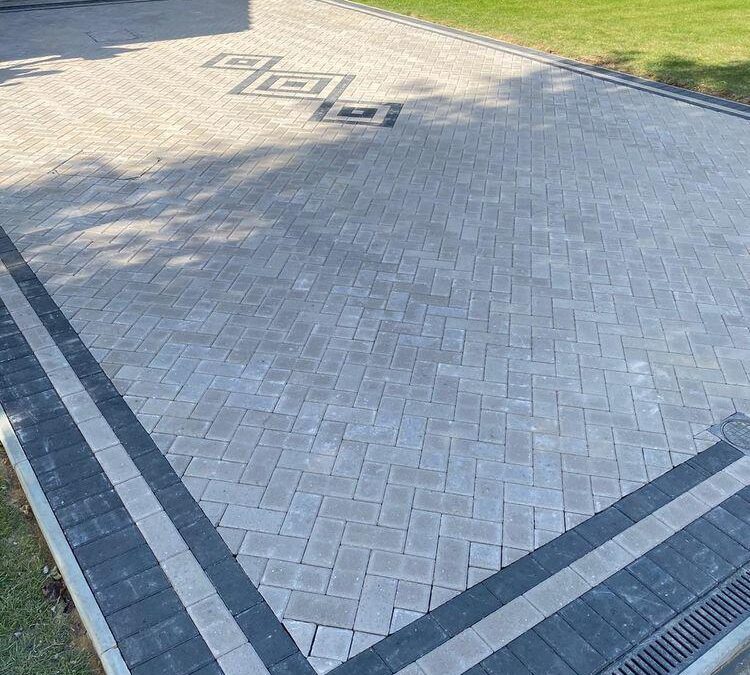
If you’re weighing up resin bound vs block paving, you’re already looking at two of the best-looking driveway options in the UK. The tricky part is that they’re “better” in different ways.
In this honest guide, I’ll break down the resin bound driveway vs block paving driveway UK homeowners typically choose, including cost, drainage rules, lifespan, maintenance, and the real pros and cons you should know before booking a contractor.
For local context, South East Block Paving Ltd installs both Resin Bound driveways and Block Paving for homes around Waltham Abbey (EN9) and nearby areas, with over 20 years of trade experience.
The quick answer
- Choose resin bound if you want a smooth, modern finish with low day-to-day upkeep and (when built correctly) excellent permeability for rainwater.
- Choose block paving if you want a classic look, lots of design choices, and the ability to lift and repair small sections easily over time.
If you’re still unsure, jump to the “Which one suits your home?” section, where you’ll see quick scenarios.
Drainage and planning rules (this can decide it for you)
For front driveways in England, the Planning Portal rule is simple:
“If the surface to be covered is more than five square metres planning permission will be needed for laying traditional, impermeable driveways…”
You generally avoid planning permission issues by using:
- a permeable surface (like permeable block paving, gravel, porous asphalt), or
- directing water to a permeable area (lawn/border).
What this means for resin bound vs block paving
- Resin bound can be SuDS-friendly because it’s typically designed to be permeable when installed correctly as a resin bound system on the right base.
- Block paving can be either standard (not permeable) or permeable block paving designed for water infiltration.
Practical tip: Ask your contractor exactly how water will leave your driveway during heavy rain. If your drive currently puddles, also consider linking the solution to Groundworks & Drainage.
Cost in 2026: resin bound vs block paving cost
Costs vary a lot depending on access, excavation depth, waste removal, edging, and whether drainage work is needed.
Typical UK guide prices (2026)
- Resin bound driveway: around £120 per m² in common cost guides, with a typical 2-car (50m²) driveway around £6,000.
- Block paving driveway: often £90–£130 per m², with a typical double driveway around £5,500.
“The average cost of a block paved driveway in 2026 is between £90–£130 per m²…”
A real-world comparison example
Let’s say you have a 50m² driveway:
- Resin bound: ~£6,000 (guide)
- Block paving: ~£5,500 (guide)
What changes the price quickly (for both):
- deep excavation (bad existing base, soft ground)
- lots of cutting (curves, manholes, awkward shapes)
- premium borders/kerbs
- added drainage channels/soakaway
Resin bound vs block paving pros and cons
Resin bound: pros
- Smooth, seamless look (very “finished” visually)
- Low day-to-day maintenance (usually sweep and occasional wash)
- Weed resistance (fewer gaps than block paving, though weeds can still appear at edges)
- Permeability potential: resin bound is commonly described as fully permeable (when installed as a proper bound system, not bonded).
Resin bound: cons (be honest)
- Installation sensitivity: resin bound needs correct base prep and dry conditions to install well.
- Not all “resin” is the same: resin bonded is different from resin bound, and bonded systems are typically not permeable.
- Repairs can be more visible than replacing a few blocks (depends on colour blend and installer skill)
Block paving: pros
- Classic kerb appeal with lots of patterns and colour choices
- Repairability: if a section sinks, you can lift and re-lay just that area rather than resurfacing everything
- Strong for turning vehicles (especially herringbone patterns)
- Permeable option exists (permeable block paving systems)
Block paving: cons
- More joint maintenance: jointing sand can wash out over time and may need topping up
- Weeds can appear in joints if maintenance is neglected (usually from wind-blown seeds rather than “growing up from below”)
- If base work is poor, you’ll see it as dips or tyre tracks
Durability and lifespan
You’ll see slightly different lifespan numbers depending on usage and maintenance, but these are realistic UK ranges:
- Block paving: commonly quoted around 20–25 years, potentially longer with good installation and care.
- Resin bound: often quoted around 15–25 years for a professionally installed surface.
Key point (experience-based but practical): Both can last well if the groundwork is right. Most early failures come from poor base prep or drainage, not the surface choice.
Maintenance: which is easier?
Resin bound maintenance (typical)
- Sweep leaves regularly (stops organic build-up)
- Light wash down when needed
- Avoid harsh power-washing too close to edges
Block paving maintenance (typical)
- Brush and keep joints topped with sand when needed
- Occasional weed treatment (especially along edges)
- A careful clean (and re-sand joints afterwards)
Reality check: If you want “set and forget”, resin bound is usually easier day-to-day. If you don’t mind a bit of seasonal upkeep and want easier spot repairs, block paving is strong.
Looks: what suits UK homes best?
This is where personal taste meets property style.
- Resin bound often looks best on modern homes, recently renovated properties, and where you want a clean, minimalist front.
- Block paving suits almost everything, especially period homes, traditional brick properties, and homes that already have brickwork details.
If you’re also improving the front garden, consider combining the driveway with Landscaping or Fencing (fencing is listed under landscaping on the site navigation).
Installation and disruption: what to expect
Both options typically involve:
- excavation
- sub-base build-up and compaction
- edging restraints (especially important for block paving)
- finishing and clean-up
Resin bound has an extra “timing” factor: the surface is more weather-sensitive during installation. Homeowner guidance commonly notes it should be laid on a solid base and in dry conditions to avoid bonding/cracking issues.
Which one is best for your home? (quick scenarios)
Choose resin bound if…
- Your driveway puddles and you want a surface that can be designed for permeability.
- You want a smooth, modern finish that’s easy to keep looking tidy.
- You don’t want to deal with joint sand and weeds in joints.
Choose block paving if…
- You want the easiest long-term spot repairs (lift, fix, re-lay).
- You love patterns, borders, and a more traditional look.
- You may change things later (for example, adding a new cable run, changing a section, replacing a drain cover).
Still undecided?
A good compromise is: block paving with a permeable specification (if drainage is the main concern) or resin bound with a properly designed base and edging detail.8 questions to ask your driveway installer
- Is this design permeable or will water be directed to a permeable area?
- For resin: are you installing resin bound, not resin bonded?
- What’s the excavation depth and sub-base build-up?
- How are edges restrained (kerbs/edging)?
- What’s included in waste removal and disposal?
- How do you handle existing manholes and services?
- What aftercare do you recommend for the first year?
- Can I see local examples similar to my property?
Final verdict
So, is resin bound better than block paving? Not always. Resin bound often wins on low maintenance and a smooth modern finish. Block paving often wins on flexibility, classic style, and easy sectional repairs.
The “best” choice comes down to:
- your drainage situation,
- your maintenance tolerance,
- your home’s style,
- and whether you value seamless looks (resin) or modular repairability (blocks).