
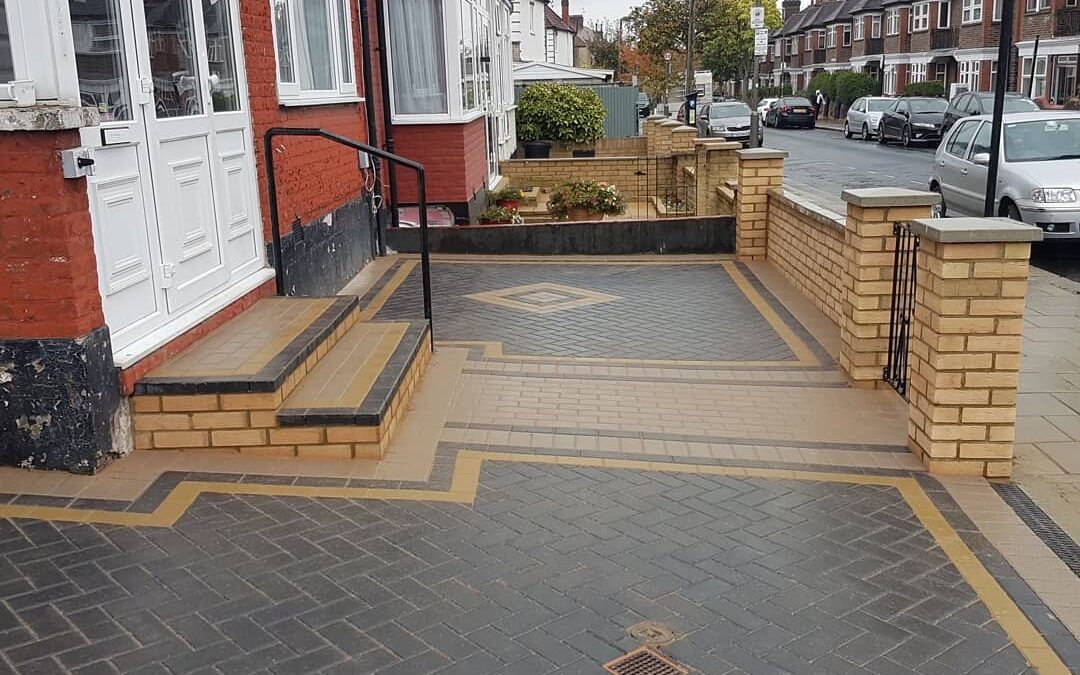
Block paving is one of the most popular driveway choices in the UK because it looks smart, lasts well, and (when installed properly) is easy to repair if a section ever sinks or gets damaged.
But the key phrase there is “installed properly.” A great-looking surface can still fail if the groundwork, drainage, or edging is wrong.
This guide explains block paving installation in plain English — what block paving contractors actually do, what you should expect on site, typical costs and timelines, and what to ask before you book.
South East Block Paving Ltd offers block paving driveway solutions in Waltham Abbey, including installation, repairs, and maintenance.
Why homeowners choose block paving
Block paving is popular because it offers:
- Kerb appeal: lots of colours, patterns and edging options
- Easy repairs: you can lift and re-lay a small area without resurfacing the whole drive
- Strong performance: when built on the right base, it handles daily vehicle use well
How long does it last?
Many sources suggest block paving can reliably last around 20–25 years with correct installation and maintenance.
Pavingexpert also notes that when laid properly it should give at least 10 years of trouble-free service, and mentions examples from the early 1980s still functioning.
Before you start: drainage and planning (front driveways)
If you’re paving a front garden in England, drainage rules matter:
- You generally won’t need planning permission if the driveway uses permeable surfacing (including permeable concrete block paving) or if rainwater drains to a permeable area like a lawn/border.
- If the area is over 5m² and you use traditional impermeable surfacing without proper runoff to a permeable area, planning permission may be needed.
Simple takeaway: if your drive is large or currently puddles, ask your contractor how they’ll manage water (falls, channels, soakaway, or a permeable build).
Block paving installation step-by-step (what good contractors do)
1) Set out levels and falls (so water drains properly)
A proper contractor starts with levels:
- finished height at doors/paths
- falls away from the house
- where water will run in heavy rain
Some manufacturer guidance also recommends keeping finished paving at least 150mm below the damp-proof course (DPC) of the building.
2) Excavation (digging out)
For a typical domestic driveway, excavation is commonly around 200–250mm below finished paving level (varies by ground and build-up).
Real-life example (waste):
Pavingexpert notes a typical builders’ skip holds about 4.5m³, and with a ~200mm dig depth you may need roughly 1 skip per 20–25m² of paving (and spoil “bulks up” after digging).
3) Sub-base installation (the most important part)
This is the foundation that prevents sinking and rutting.
- Many guides recommend an MOT Type 1 sub-base and state it should be built up and compacted properly.
- Pavingexpert advises spreading sub-base in layers no thicker than 150mm and compacting properly.
If you ever see block paving that’s sunk in two tyre tracks, it’s usually because the base wasn’t done right.
4) Edge restraints (so the blocks don’t spread)
Edge restraints are what keep everything “locked” in place — especially on driveways that take vehicle weight. Contractors typically install kerbs/edgings set firmly (often in concrete) before laying blocks.
5) Bedding layer (laying course)
A consistent bedding layer (often sharp sand) is laid and levelled to the correct falls before the blocks go down.
6) Laying the blocks + cutting in neatly
Blocks are laid to a pattern (more on patterns below), then cut to fit edges, covers, and curves.
7) Compaction + jointing sand
Blocks are compacted, kiln-dried sand is brushed into joints, and compacted again so joints lock tight.
8) Clean-up and handover
A professional finish includes:
- tidy edges
- cleaned site
- clear advice on parking time (often 24–48 hours depending on the build and conditions)
Patterns that matter
For driveways, herringbone patterns are often recommended because they interlock strongly under vehicle turning and braking.
A good contractor will advise a pattern based on:
- how you enter/exit the drive
- whether you turn wheels while stationary (common cause of movement)
- slope and drainage needs
How long does block paving installation take?
For an average driveway, many jobs fall into:
- Small driveway (20–40m²): often a few days
- Medium driveway (40–70m²): commonly around 4–6 days
- Larger jobs can take longer (especially if drainage/groundworks are needed)
Weather and access can affect this (especially if spoil removal is difficult).
Cost guide (UK ballpark)
Prices vary with excavation depth, waste removal, access, edging, drainage, and pattern complexity.
As a broad guide, Checkatrade states:
- Average block paving cost ~£100 per m²
- Around £5,500 for a 50m² driveway (typical 2-car size)
Use this as a starting point only — the quote should clearly list what’s included (excavation, sub-base thickness, edging, drainage, waste removal).
Questions to ask block paving contractors
- How will you manage drainage and where will rainwater go?
- How deep will you excavate (and why)?
- What sub-base type and thickness will you use, and how will it be compacted?
- What edging/kerb restraints are included?
- Is waste removal included (how many skips)?
- What pattern do you recommend for vehicle use (and why)?
- Will you return to re-sand joints if needed after initial settlement?
Sealing: should you seal block paving?
Sealing can help with stain resistance and appearance, but timing matters.
Pavingexpert advises not applying sealant to paving that is less than 3 months old, and not before efflorescence has disappeared (otherwise you can “seal in” white marks).
Simple rule for homeowners: don’t rush sealing. Let it settle, see how it behaves through weather, then decide.
Quick maintenance tips (to keep it looking smart)
- Brush clean regularly (stops moss build-up)
- Top up joint sand if it washes out after heavy rain/jet washing
- Deal with weeds early (they usually grow from wind-blown seeds in joints, not “from underneath”)
- Avoid aggressive pressure washing too close to joints unless you re-sand afterwards
Local note (Waltham Abbey / EN9)
If you’re local and comparing quotes, look for a contractor who can clearly explain:
- drainage plan (especially for front drives)
- excavation + sub-base build-up
- edging restraint detail
- and what’s included in the price
South East Block Paving Ltd is based around Waltham Abbey and promotes block paving installation, repairs, and maintenance, alongside other outdoor services.