
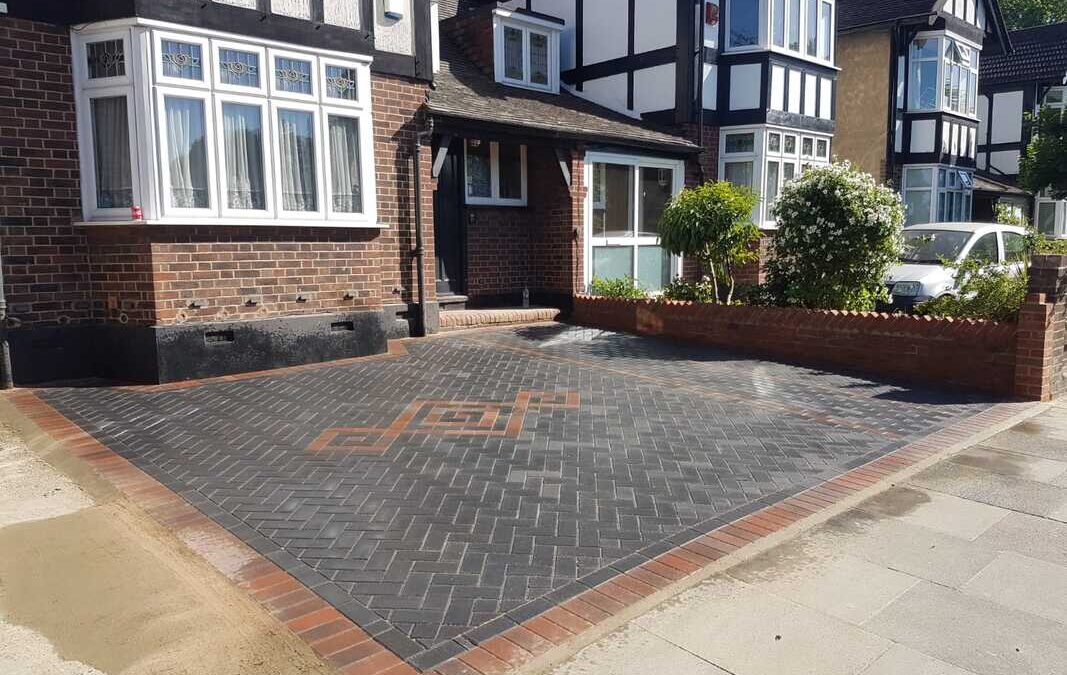
If you’ve ever looked at your driveway after a week of rain and thought “why is it always puddling there?” — you’re already thinking like a good contractor. A driveway isn’t just a “surface”. It’s a small construction project that needs the right ground prep, levels, and drainage so it looks good and lasts.
This guide breaks down what driveway contractors actually do (step-by-step), what you should expect on site, and the key questions to ask before you hire anyone in Waltham Abbey and surrounding areas.
What is a driveway contractor?
A driveway contractor is a specialist who designs, prepares, and installs hard-standing areas for vehicles — most commonly:
- Block paving
- Resin bound
- Tarmac/asphalt
- Gravel
- Concrete (less common on modern domestic jobs)
Good driveway contractors also handle the “extras” that make the job work properly, such as drainage, edging kerbs, steps, small walls, and often landscaping/fencing to finish the front of the property.
Many local firms (including contractors around Waltham Abbey, EN9) offer a broader outdoor package: driveways, patios, landscaping, fencing, and general building work as part of the same project.
What driveway contractors do (the full process)
1) Site visit and honest advice
Before any digging starts, a proper contractor will:
- look at the slope of the land,
- check how water currently runs,
- note access and parking needs (1 car vs 2 car),
- and assess the condition of the existing driveway (if you’re overlaying or replacing).
They’ll often spot issues you might not notice, like low spots near the house or where water will naturally collect.
2) Measure up and plan the layout
They’ll measure the area and plan details like:
- where the driveway starts/ends,
- edging lines and curves,
- patterns (for block paving),
- and practical features like a turning area or widened entrance.
A small design decision (like moving the edge line 150mm) can be the difference between “tight squeeze” and “easy parking”.
3) Drainage checks and planning rules (big one in the UK)
In England, rules apply for front driveways.
You usually don’t need planning permission if the driveway uses permeable surfacing (or water drains to a permeable area like a lawn or border). But if you’re laying a traditional impermeable driveway over more than 5m² and it doesn’t drain to a permeable area, you may need planning permission.
A contractor should talk you through options such as:
- permeable block paving,
- resin bound (when installed on an appropriate base),
- gravel,
- or adding drainage channels/soakaway solutions.
4) Excavation and waste removal
This is the messy part — and where DIY jobs often get stuck.
For a typical domestic block paved driveway, guidance commonly suggests excavating around 200–250mm below finished level (depending on build-up). Then there’s spoil removal. As a rough guide, a typical builders’ skip holds around 4.5m³, and at about 200mm dig depth you may need roughly one skip per 20–25m² — plus excavated material “bulks up” by around 20–30% once dug out.
Simple example:
If you’re doing a 50m² front drive at a 200mm dig, you could be looking at roughly 2 skips worth of spoil once you account for bulking — and that’s before old concrete/tarmac chunks.
5) Sub-base installation (the real foundation)
This is the most important part of the entire job.
Driveway contractors install a sub-base (often MOT Type 1 or similar) in layers, compacted properly to stop sinking and rutting. Guidance commonly points to sub-base thickness around 100–150mm for many domestic block paving jobs, with the overall build-up forming part of that 200–250mm excavation depth.
6) Edging kerbs and restraints
Edges stop the driveway spreading, keep the lines neat, and help the surface stay locked in place (especially with block paving).
Good driveway contractors will set edging into concrete where needed, ensuring it’s level and solid.
7) Laying the surface (materials done properly)
Different driveway types require different methods:
Block paving
- Sharp sand bed, blocks laid to pattern, cut neatly, compacted, then jointed with kiln-dried sand.
Tarmac/asphalt
- Sub-base to levels, then asphalt layers to specification (binder + surface course depending on job).
Resin bound
- Requires correct base and dry conditions; applied and finished in a way that keeps it smooth and consistent (and avoids loose stones later).
Gravel
- Proper membranes, stabilisation (often), and edging so gravel doesn’t wander into the pavement.
8) Finishing and clean-up
The job isn’t done until the details are done:
- re-sanding joints (block paving),
- tidying edges,
- cleaning nearby paths/kerbs,
- and making sure gates and access still work.
9) Repairs and maintenance
Many driveway contractors don’t just build new drives — they also:
- fix sinking or rocking blocks,
- patch potholes/cracks (where suitable),
- refresh joints,
- and advise on cleaning and aftercare.
What to expect on-site (realistic timeline)
Every job is different, but here’s what a typical replacement driveway can look like:
- Day 1: excavation + spoil removal
- Day 2: sub-base build-up + compaction
- Day 3–4: edging + surface installation (block/tarmac/resin depends on curing/weather)
- Final: finishing details + clean-up
Weather can slow things down — and a good contractor will be honest about that rather than rushing a resin finish in poor conditions.
Common problems driveway contractors prevent
These are the big “regrets” homeowners want to avoid:
- puddles near the house (wrong falls/drainage),
- sinking or wheel ruts (poor sub-base/compaction),
- blocks spreading at the edges (weak restraints),
- loose gravel escaping everywhere (no edging/stabilisation),
- and surface cracking due to poor preparation.
Questions to ask before you hire driveway contractors
Use these and you’ll quickly see who knows their trade:
- How will water drain from the driveway?
- How deep will you excavate, and what sub-base will you use?
- How will you compact the base (and in layers)?
- What’s included in the quote (waste removal, materials, finishing)?
- What happens if you find soft ground or old foundations?
- What aftercare do you recommend (cleaning, re-sanding, sealing timing)?
Red flags to watch for
Be cautious if someone:
- won’t explain the ground prep,
- won’t talk about drainage or planning rules,
- offers a “cheap quick overlay” without checking the base,
- can’t provide evidence of previous similar work,
- or pushes for immediate cash-only decisions.
One last thing: safety and proper kit matters
Driveway work involves heavy machinery and vibrating tools (like compactors and cutters). The HSE provides guidance on controlling hand–arm vibration risks and expects proper controls and safe working practices in relevant industries.
That’s another reason many homeowners prefer a professional team over a DIY attempt for anything bigger than a small path.
Wrap-up
So, what do driveway contractors do? They don’t just “lay a driveway”. They design the layout, handle drainage, excavate correctly, build a proper sub-base, install the surface to a standard, and finish it cleanly — so it looks good and performs well year after year.