
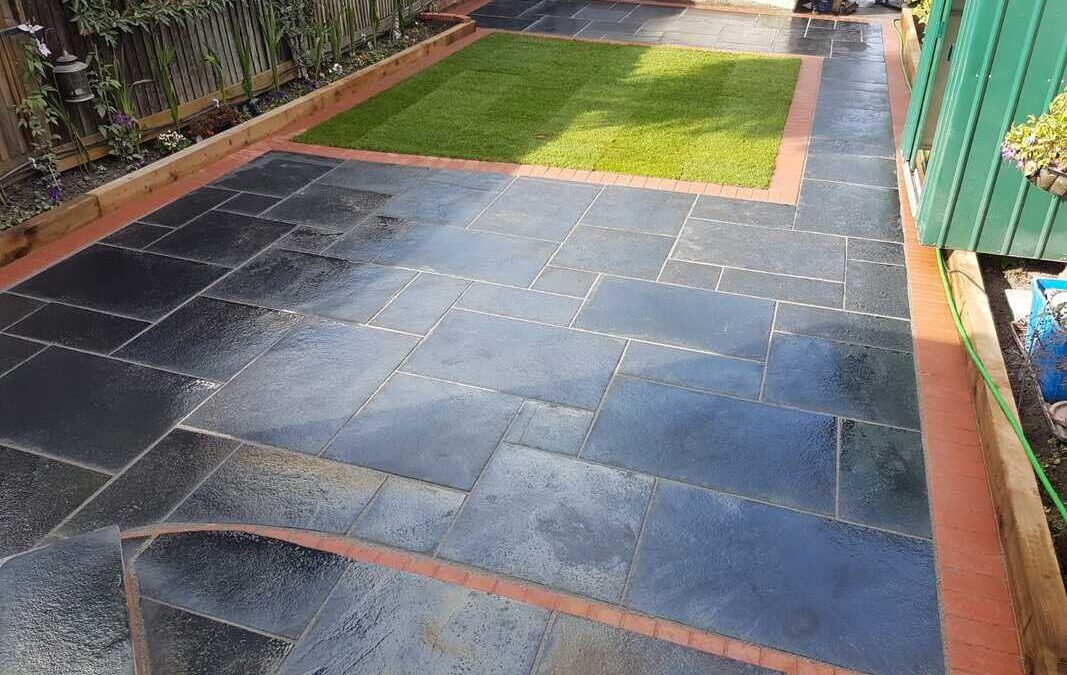
A patio seems simple on paper: a flat area, a few slabs, job done. But in real life, a patio only stays level, drains properly, and looks smart for years when the “invisible” parts are done right: ground prep, sub-base, falls (slope), edging, and pointing.
So if you’re searching for patio contractors in and around Waltham Abbey (EN9), here’s a clear, homeowner-friendly guide to choosing the right team, what to ask, and how to avoid the common headaches.
Step 1: Get clear on what you need the patio to do
Before you speak to any contractor, answer these 5 quick questions:
- What will you use it for most? (BBQs, outdoor dining, kids playing, hot tub, low-maintenance seating area)
- How many people should it comfortably fit?
- Do you want steps, a path, raised planters, or lighting later?
- How much sun/wet weather does the area get? (important for slip resistance and algae)
- Do you want it “flush” to your back doors or slightly below? (threshold heights matter)
Simple example:
If you host family often, you may want space for a 6–8 seater table plus 1 metre of walking room around it. That usually works out closer to 20–30m² than people expect.
Step 2: Choose a patio style and material that matches your lifestyle
A good patio contractor won’t push one material for every home. They’ll explain pros/cons based on your budget and maintenance expectations.
Common UK patio options:
Natural stone (sandstone/limestone)
- Classic look, good grip when chosen correctly
- Needs sensible cleaning; some stones benefit from sealing
Porcelain paving
- Very low maintenance, modern finish
- Needs precise installation and the right adhesive system
Concrete slabs
- Often cost-effective
- Can look great when paired with neat edging and landscaping
Block paving (for patios too)
- Works well for curves and decorative patterns
- Strong when installed on a proper base
Tip: If your patio is shaded or under trees, ask about finishes that help reduce slippery build-up and make cleaning easier.
Step 3: Make sure they talk about drainage and falls (this is non-negotiable)
A patio should not send rainwater toward your house. You want a gentle slope (often called “the fall”) away from the property so water runs off safely.
Also, if you’re paving a front garden area (or creating a large hard surface near the house), permeability and runoff matter. Government guidance explains how permeable surfacing, soakaways, and similar approaches help reduce runoff into drains, and notes the advice can apply to other paved areas around the house, including patios.
What to listen for in a contractor’s explanation:
- Where will the water go in heavy rain?
- Will they use a permeable solution, drainage channel, or soakaway if needed?
- How will they prevent pooling at low spots?
If a contractor shrugs off drainage with “it’ll be fine,” that’s a red flag.
Step 4: Ask exactly what’s going underneath (sub-base and build-up)
Most patio problems come from what you can’t see later:
- slabs rocking,
- sunken corners,
- cracks,
- or joints washing out.
A professional patio contractor should be happy to specify:
- excavation depth,
- sub-base type (often MOT Type 1),
- thickness,
- and how they’ll compact it.
As a practical reference point, one UK supplier guide notes that for patios (typically lighter load than driveways), around 100mm of MOT Type 1 sub-base is often sufficient when correctly installed (ground conditions vary).
And if they mention compaction, that’s a good sign. Paving expert guidance highlights that Type 1 aggregate compacts significantly (often around 30% as a very general rule), which is why proper layering and compaction matter.
Step 5: Check they have real local proof, not just stock photos
When you’re hiring patio contractors, you want evidence of:
- jobs like yours,
- neat finishing,
- and consistent quality.
Look for:
- before/after photos that show levels and edges
- close-ups of pointing/joints
- steps, curves, and tricky areas (these show skill)
If a contractor is listed on trusted platforms, read the detail in reviews. For example, Checkatrade reviews for South East Block Paving Ltd mention customers valuing stage-by-stage explanations and professional workmanship on driveway installations (the same planning and prep discipline carries across to patios).
Step 6: Confirm they’re properly insured and professional on paper
At minimum, ask for:
- Public liability insurance (don’t feel awkward asking)
- a written quote with clear scope
- start date and estimated duration
- payment schedule (avoid full payment upfront)
A proper quote should include:
- excavation and waste removal
- sub-base specification and thickness
- edging detail (how it’s restrained)
- laying method
- jointing/pointing method
- clean-up and handover
Step 7: Compare quotes the right way (not just the bottom line)
Two quotes can look similar in price but be totally different in what you’re getting.
When comparing, line up these items side-by-side:
- Excavation depth: deeper isn’t always better, but too shallow is a problem
- Sub-base thickness + material: is it Type 1? how many mm?
- Edging: included or extra? set in concrete or not?
- Pointing/jointing: what method and what product?
- Waste removal: included or “you organise a skip”?
- Drainage solution: included if needed?
Simple example:
If Quote A includes waste removal, full sub-base, and proper edging, and Quote B is “lay slabs over existing ground,” Quote B can look cheaper now but often costs more later when it settles or drains badly.
Step 8: Ask 10 smart questions (copy/paste this)
When you speak to patio contractors, ask:
- How will you ensure water drains away from the house?
- What excavation depth are you recommending for my ground?
- What sub-base type and thickness will you install?
- How will you compact the base (in layers or all at once)?
- How will you handle edging and prevent movement?
- What laying method will you use for this material?
- What jointing/pointing method do you recommend and why?
- What’s included in the price (waste removal, clean-up, materials)?
- What happens if you find soft ground or old concrete underneath?
- What aftercare do you recommend (cleaning, sealing, re-pointing)?
If they answer calmly and clearly, you’re on the right track.
Step 9: Watch for these red flags
Be cautious if a contractor:
- won’t put details in writing
- avoids drainage conversations
- offers a “today only” discount
- can’t explain the base build-up
- has no local examples or reviews
- asks for full payment upfront
What a good patio contractor typically provides (the “full package”)
The best results usually come when one team can handle the entire outdoor finish, not just laying slabs. Many homeowners want:
- patio + path to the garden
- patio + landscaping/turf
- patio + fencing refresh
- patio + small steps/walls
South East Block Paving Ltd positions itself as providing patios and related outdoor works (including driveways, block paving, resin bound, landscaping, fencing, and general building) across Waltham Abbey and nearby areas, with a focus on quality installations.
Final tip: Choose the contractor who explains the prep, not just the paving
The nicest slab in the world won’t save a patio built on poor groundwork. When choosing among patio contractors, pick the one who:
- explains drainage properly,
- specifies sub-base clearly,
- shows real local work,
- and puts everything in writing.