
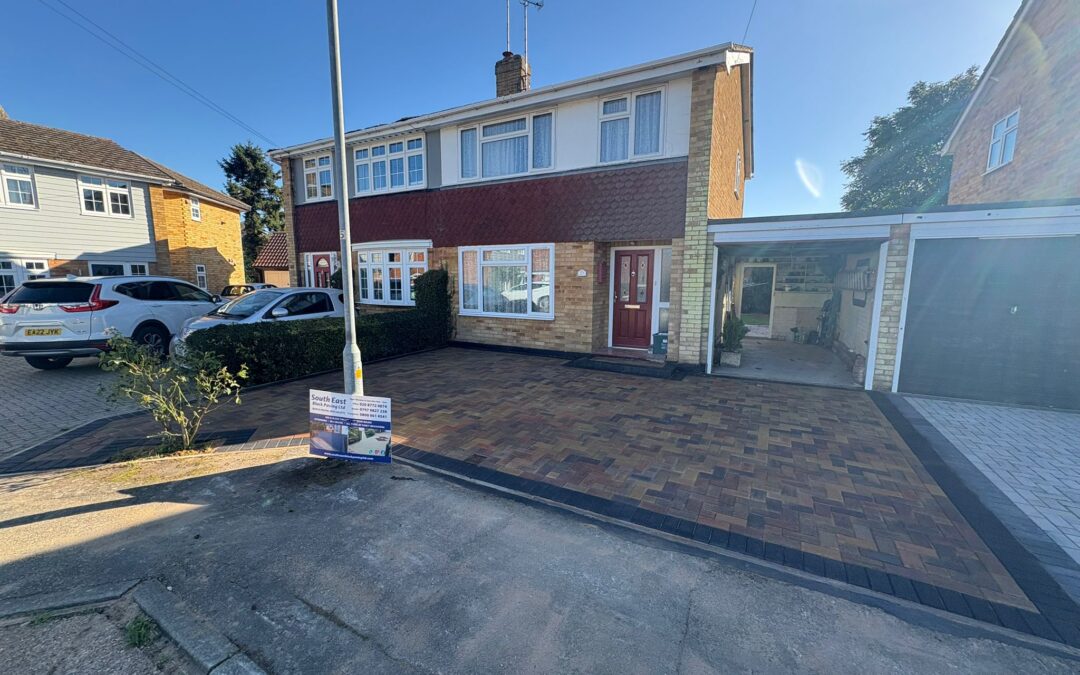
If you are planning a new driveway, permeable block paving is worth considering — especially if you want a smart front entrance that also deals with rainwater properly.
Many UK homeowners focus on the look of the driveway first: colour, pattern, and kerb appeal. Those things matter, but drainage matters just as much. Poor driveway drainage can lead to puddles, water running towards the house, slippery areas, and planning issues for front gardens.
This guide explains what permeable block paving is, how it works, when it may be useful, and what homeowners should ask before installation.
At South East Block Paving Ltd, we provide block paving, driveways, and groundworks and drainage services across Waltham Abbey and nearby areas.
TL;DR: What is permeable block paving?
Permeable block paving is a driveway system designed to allow rainwater to drain through the surface and into a suitable sub-base below.
It can be a good option if:
- you want a block paved driveway with better drainage
- your front garden is being converted into parking
- you want to reduce surface water runoff
- your driveway is over 5m² and planning rules are a concern
- your current driveway puddles after rain
- you want a neat, structured alternative to gravel
The key point: permeable block paving is not just about the blocks. It needs the right sub-base and installation method to work properly.
Why driveway drainage matters
A driveway has to cope with regular rain, vehicle weight, and daily use. If water has nowhere to go, it can cause problems.
Poor drainage can lead to:
- standing water
- slippery patches
- moss and algae build-up
- movement in the surface
- damage near edges
- water running onto pavements or roads
- damp concerns if water runs towards the house
A well-installed driveway should direct water safely. That may be through a permeable surface, correct falls, channel drains, soakaways, or drainage to a lawn or border.
“The best driveway designs do not fight the rain. They plan for it from the start.”
This is especially important in the UK, where wet weather is a normal part of driveway life.
What does “permeable” actually mean?
A permeable driveway surface allows rainwater to pass through instead of sitting on top or running straight off.
With permeable block paving, water typically passes through wider joints between the blocks and into a specially prepared sub-base. This sub-base stores and manages the water before it slowly drains away, depending on the ground conditions and design.
This is different from standard block paving, where water usually runs over the surface unless drainage is added.
Permeable block paving can still look like a normal block paved driveway, but the build-up underneath is different.
UK planning rules: why permeable paving matters
In England, driveway drainage rules are important when paving a front garden.
GOV.UK guidance explains that you will not usually need planning permission if a new or replacement driveway uses permeable or porous surfacing, such as gravel, permeable concrete block paving, or porous asphalt. It also says that if the surface is over 5m² and uses traditional impermeable materials without directing water to a permeable area, planning permission may be needed.
External reference:
https://www.gov.uk/government/publications/permeable-surfacing-of-front-gardens-guidance
The Planning Portal gives similar guidance for householders.
External reference:
https://www.planningportal.co.uk/permission/common-projects/paving-your-front-garden/planning-permission
In simple terms:
- permeable block paving can help manage driveway drainage
- standard impermeable surfacing may need extra drainage planning
- water should not simply run into the road or public drains
- a proper driveway design should be planned before work starts
If you are unsure, always check current guidance or speak with your local authority.
Permeable block paving vs standard block paving
Both options can look attractive, but they manage water differently.
Standard block paving
Standard block paving is laid over a traditional compacted base with a bedding layer. Water usually runs over the surface, so the installer must plan falls and drainage.
It works well when:
- there is a clear drainage route
- water can be directed to a lawn or border
- channel drains are installed where needed
- the property layout allows safe runoff management
Permeable block paving
Permeable block paving is designed as a drainage system. Water passes through the joints and into the sub-base.
It works well when:
- surface water runoff is a concern
- planning rules need to be considered
- you want a structured surface with better drainage
- the driveway has limited space for surface channels
- you prefer a neater finish than gravel
Both options can be suitable. The right choice depends on your property, soil conditions, driveway size, and budget.
Benefits of permeable block paving driveways
- Better rainwater management
The main benefit is drainage. Instead of allowing water to run across the surface, permeable paving helps water pass through the driveway system.
This can reduce puddling and help manage rainwater more responsibly.
- Planning-friendly design
Because permeable concrete block paving is specifically mentioned in UK guidance, it can be useful for front garden driveways where planning rules are a concern.
However, the whole system must be installed correctly. Simply using blocks and calling the driveway “permeable” is not enough.
- Strong kerb appeal
Permeable does not have to mean plain. You can still choose colours, borders, and layouts that suit the property.
Popular styles include:
- charcoal borders
- brindle centres
- grey modern tones
- traditional red blocks
- clean rectangular patterns
For more design ideas, visit our block paving page.
- More stable than loose gravel
Gravel is naturally permeable, but it can move around, form tracks, and scatter onto the pavement.
Permeable block paving gives a more structured and stable finish while still supporting better water management.
- Repairable in sections
Like standard block paving, permeable block paving can often be lifted and repaired in sections if needed. This makes it practical for long-term use, especially around manholes or service access points.
Things to consider before choosing permeable block paving
Permeable block paving is useful, but it is not automatically right for every driveway.
Before installation, your contractor should consider:
- ground conditions
- drainage capacity
- driveway slope
- nearby buildings
- existing drains and services
- vehicle use
- available depth for the correct sub-base
- local planning requirements
If the ground does not drain well, extra design work may be needed.
That is why permeable paving should be installed by a contractor who understands both block paving and drainage.
How is permeable block paving installed?
A professional installation usually includes:
- Site survey
The contractor checks levels, water flow, driveway size, access, and any existing drainage concerns.
- Excavation
The area is dug out to allow the correct permeable build-up. The depth depends on the design, ground conditions, and expected use.
- Permeable sub-base
A suitable open-graded sub-base is installed to allow water movement and storage. This is different from a standard compacted driveway build-up.
- Edge restraints
The edges are secured to keep the paving stable.
- Block installation
Permeable blocks are laid with appropriate jointing material that allows water to pass through.
- Final checks
The contractor checks levels, finish, drainage points, and clean-up.
This is why choosing experienced block paving contractors is important. Permeable paving is a system, not just a surface.
How much does permeable block paving cost?
Permeable block paving can cost more than a basic standard installation because the system requires specific materials, correct sub-base design, and careful installation.
As a broad reference, UK driveway paving cost guides often place standard block paving around £90–£130 per m², depending on the project. Permeable designs, drainage requirements, access, and ground conditions may change the final cost.
External reference:
https://www.checkatrade.com/blog/cost-guides/driveway-paving-cost-estimate/
The best way to get an accurate price is through a site survey. A contractor needs to see the area before advising whether standard block paving, permeable block paving, resin bound, tarmac, or gravel is the most suitable choice.
Permeable block paving vs resin bound
Both can support better water management when installed correctly, but they offer different finishes.
Choose permeable block paving if:
- you want a traditional block paved look
- you like borders and patterns
- you want easier section repairs
- you prefer a modular driveway surface
Choose resin bound if:
- you want a smooth, modern finish
- you prefer fewer joints
- you want a clean decorative stone appearance
- you like a lower-maintenance surface
You can compare options further on our resin bound and driveways pages.
Permeable block paving vs gravel
Gravel is naturally permeable and often more budget-friendly, but it is loose. It can spread, move under tyres, and need regular raking.
Permeable block paving offers:
- a more stable surface
- easier walking and bin access
- cleaner edges
- stronger kerb appeal
- a more formal finish
Gravel still works well for some homes, especially larger or rural-style properties. See our gravel driveways page for comparison.
Maintenance tips for permeable block paving
Permeable paving needs sensible maintenance so water can continue to pass through.
Homeowners should:
- sweep leaves and debris regularly
- avoid allowing mud to clog joints
- remove weeds early
- clean carefully when needed
- avoid blocking drainage routes
- ask the installer about suitable joint maintenance
The Royal Horticultural Society also encourages permeable paving and keeping front garden hard surfaces to a minimum where possible, as part of better front garden design.
External reference:
https://www.rhs.org.uk/garden-design/permeable-paving
Questions to ask before installation
Before choosing permeable block paving, ask:
- Is permeable block paving suitable for my ground conditions?
- What sub-base system will you use?
- Where will the water go after it passes through the paving?
- Will this meet current driveway drainage guidance?
- How deep will you excavate?
- How will the edges be restrained?
- What jointing material will be used?
- How should I maintain the surface?
- Is waste removal included?
- Can I see examples of similar installations?
A good contractor should be able to explain these in simple terms.
FAQs about permeable block paving driveways
Is permeable block paving good for driveways?
Yes. It can be a good driveway option when installed correctly as a full permeable system with the right sub-base and jointing material.
Does permeable block paving need planning permission?
Usually, permeable surfaces are treated more favourably under front garden driveway rules, but you should always check current guidance and local requirements.
Is permeable block paving better than standard block paving?
It is better where drainage is a major concern. Standard block paving can still work well if water is directed safely to a permeable area or drainage system.
Is permeable block paving expensive?
It may cost more than a basic standard block paving installation because the drainage system underneath is different. The final cost depends on the site.
Can permeable block paving block up?
It can become less effective if joints are clogged with mud, silt, or debris. Regular sweeping and sensible maintenance help keep it working properly.
Is gravel better than permeable block paving?
Gravel is often cheaper and naturally permeable, but permeable block paving gives a more stable and structured surface.
Final thoughts
Permeable block paving is a smart option for homeowners who want the look of a block paved driveway with better rainwater management.
It can be especially useful for front driveways, larger hardstanding areas, and properties where drainage needs careful planning. But it must be installed as a complete system — not just as standard paving with a different name.
For homeowners in Waltham Abbey and surrounding areas, South East Block Paving Ltd can advise on block paving, driveways, and groundworks and drainage to help you choose a driveway surface that looks good and works properly.
To discuss your project, visit the Block Paving page or request advice through Contact Us.