
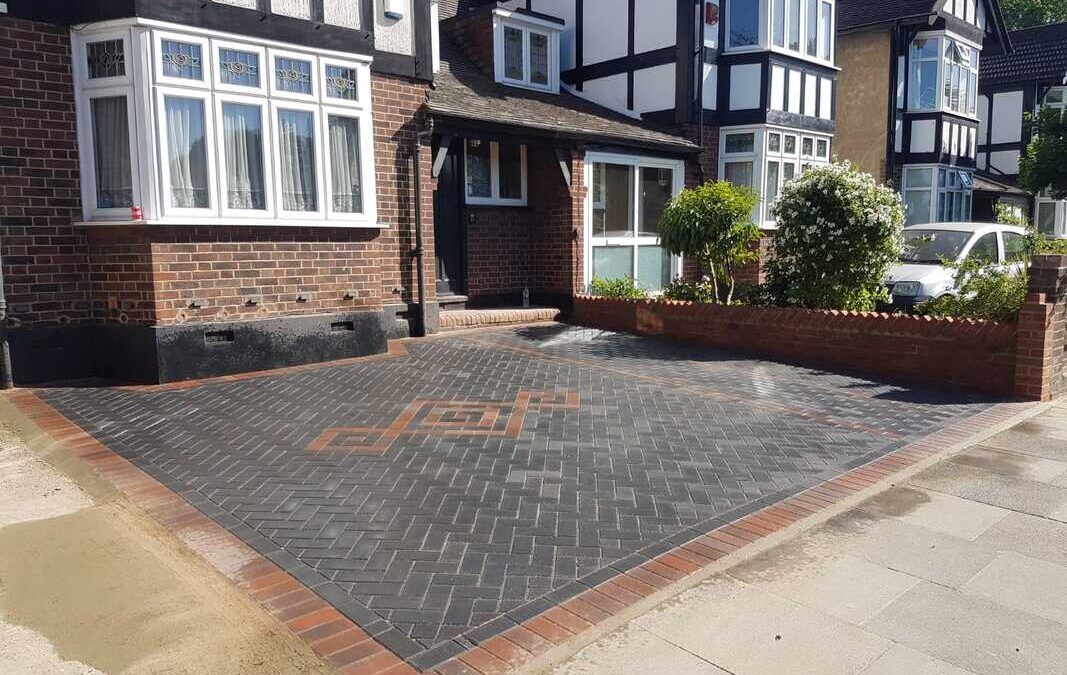
Block paving is meant to shed water quickly, so when puddles start forming in the same spot after every rainfall, it’s a fair sign that something in the original build, or how the driveway has aged, isn’t working the way it should. This is a question we get asked a lot by homeowners across Waltham Abbey and the surrounding area, and the cause usually falls into one of a handful of categories.
What’s actually going wrong when block paving doesn’t drain?
Jointing has become compacted or blocked. Block paving typically relies on permeable jointing sand between the blocks to let water pass through to the sub-base below. Over time, this jointing can become compacted with dirt, moss, or algae growth, effectively sealing the surface and forcing water to sit on top rather than draining through.
The sub-base wasn’t built with drainage in mind. Older block paving, or paving laid without proper groundwork, sometimes sits on a sub-base that wasn’t designed to let water through or away. If there’s nowhere for the water to go once it reaches the base layer, it will eventually find its way back up or simply pool.
Incorrect falls or levels. Like any paved surface, block paving needs a slight fall to move surface water toward a drain, soakaway, or the edge of the driveway. If sections have settled unevenly, or the original levels were slightly off, water collects in the resulting low points.
Settlement over individual blocks. A small dip in the middle of an otherwise flat driveway usually means a handful of blocks have settled into the base beneath them, often due to inadequate compaction when they were originally laid, or ground movement since.
No outlet for the water at all. Even a well-built permeable system needs somewhere for water to go once it’s passed through the joints and sub-base, whether that’s a soakaway or a connection to a drainage system. Without that outlet, water simply backs up.
Is this a maintenance issue or a rebuild?
If the puddling is widespread but shallow, and the driveway is a few years old, compacted or algae-blocked jointing is a strong possibility. This is often improvable through proper cleaning and re-sanding of the joints with a permeable jointing compound, restoring the driveway’s ability to drain without needing to lift any blocks.
If the puddling is localised to one or two clear low spots, with visible dips you can see even without water sitting in them, that usually points to settlement in the base beneath those specific blocks. This can often be fixed by lifting the affected blocks, adding and compacting more sub-base material, and relaying them at the correct level, without disturbing the rest of the driveway.
If the whole driveway holds water and has never really drained well, even when new, that suggests the original groundwork or falls weren’t set up correctly, and a proper regrade of that area is likely the only lasting fix.
Why drainage compliance matters for driveways
Since changes to permitted development rules some years ago, new or replacement driveways over a certain size in England generally need to either use a permeable surface, direct water to a lawn or border rather than the highway, or have planning permission if neither of those applies. Block paving, when laid with a genuinely permeable jointing system and sub-base, is one of the more common ways homeowners meet this requirement while still getting a traditional paved look. If you’re planning a new driveway or a significant repair, it’s worth checking the current rules with your local council or a qualified contractor, since the specifics can affect what kind of work is straightforward to carry out.
Local conditions around Waltham Abbey
Much of this area sits on heavier clay-based soils that don’t drain particularly well on their own. That makes the sub-base and jointing system doing the actual work of managing water even more important, since the surrounding soil isn’t going to help much once water has passed through the paving.
Practical takeaways
If you’re noticing puddles, it’s worth checking first whether the jointing sand between the blocks looks compacted, mossy, or has largely washed away, since that’s the easiest thing to identify without any digging. It’s also worth noting whether the puddling happens across the whole driveway or in one or two specific spots, since that distinction points toward very different causes and very different fixes. Keeping jointing clear of moss and organic debris, particularly in shaded areas, is a simple habit that helps prevent this building up in the first place.