
Article
A patio rarely fails all at once. It starts with a few cracked joints, then weeds, then a slab that clicks when you step on it. By the time it looks properly tired, most homeowners assume they need a new patio.
Often they don’t. If the slabs and the bed beneath them are sound, repointing (raking out the old joints and filling them again) can make a patio look close to new for a fraction of the cost of relaying it.
The trick is knowing which situation you’re in.
Signs your patio needs repointing
- Joints that are cracked, crumbling or missing in places
- Weeds and moss growing between slabs
- Sand or grit washing out onto the surface after rain
- Ants nesting in the joints
- Old pointing that’s stained or patchy, spoiling the look of good slabs
If that’s the extent of it, repointing is usually the right fix.
When repointing won’t be enough
Pointing fills the gaps between slabs. It doesn’t hold slabs up. So if the problem is underneath, new joints will crack again within a season or two.
Check for these before booking a repoint:
- Rocking slabs. If a slab moves or sounds hollow when you tap it, the bedding underneath has failed. That slab needs lifting and relaying.
- Sinking or dips. Areas that hold water after rain often point to a weak or washed-out base.
- Cracked slabs. These need replacing, not pointing around.
- Water running towards the house. That’s a levels problem, and the patio may need relaying to the right fall.
A few loose slabs don’t mean starting again. A good contractor will lift and rebed the problem slabs, then repoint the whole area so it all matches.
Jointing compound or sand and cement?
There are two main ways to point a patio, and tradespeople genuinely disagree about which is best. As Homebuilding & Renovating explains, you can use traditional sand and cement mortar or a modern jointing compound, and compound has become the more common choice today.
Here’s the honest comparison:
| Sand and cement | Jointing compound | |
| Material cost | Lower | Higher |
| Finish | Traditional; skill-dependent | Neat, consistent |
| Speed | Slower, more careful work | Quicker to apply |
| Staining risk | Cement can mark porous stone if not cleaned off fast | Lower when applied as directed |
| Where it struggles | Shrinkage cracks if mixed or cured badly | Cheaper products can wash out or soften over time |
In our view, the product matters less than who applies it and how. A well-applied sand and cement joint can last for years. A cheap compound, brushed into joints that are too shallow or applied in the wrong weather, can fail in a couple of winters. Whatever you choose, follow the manufacturer’s instructions on joint depth, weather and curing to the letter.
For porcelain patios, use a jointing product made for porcelain; standard mortar often doesn’t bond well to its dense edges.
How a professional repoint is done
- Lift and rebed any loose or rocking slabs first.
- Rake out the old pointing to a consistent depth, removing weeds and roots.
- Clean the patio thoroughly, usually with a controlled jet wash, so the new joints bond to clean stone.
- Let it dry if the chosen product requires dry joints (most mortar-free compounds and sealers do; some need the surface pre-wetted, so check the product).
- Fill the joints firmly to the right depth, with no voids underneath.
- Finish and clean the surface so there’s no residue left on the slabs.
- Seal (optional) once everything has cured, if the stone type suits it.
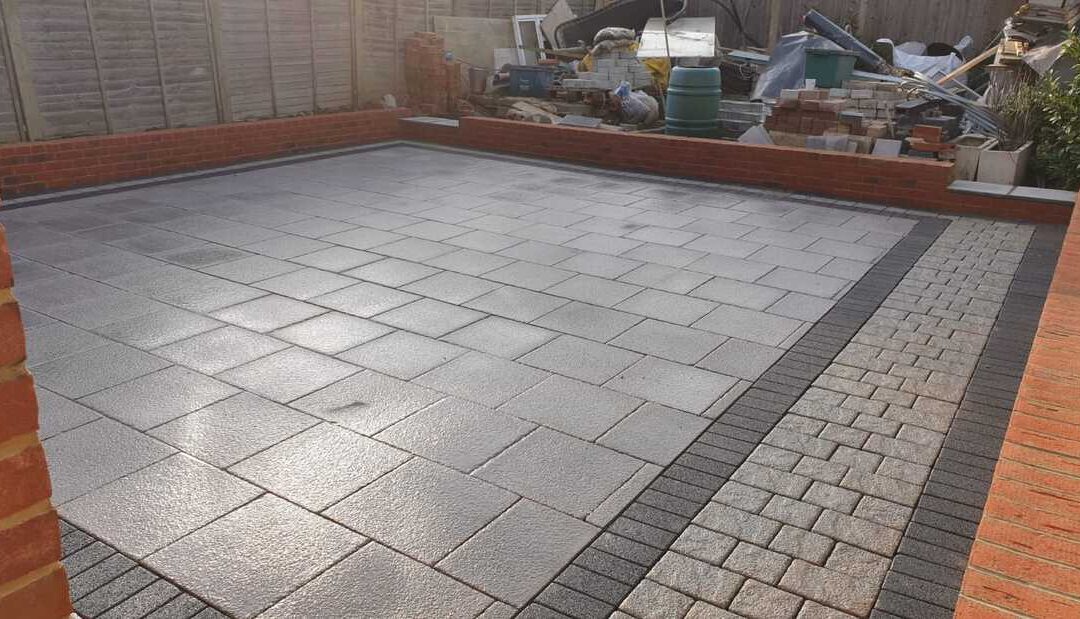
A recent patio we restored in Bishop’s Stortford followed exactly this sequence: jet-washed, old jointing removed, dried, re-jointed throughout, then sealed.
How long does repointing take?
Most residential patios can be repointed in one to a few days, depending on size, how many slabs need relaying, and drying time. Weather is the main variable. Avoid booking work for a week of forecast rain or frost.
Can you DIY it?
Small patches, yes. Raking out a whole patio by hand is slow, hard on the knees and easy to rush. The most common DIY problems we’re asked to fix are shallow joints that wash out, compound applied in damp conditions, and cement stains on light sandstone.
Get your patio looking new again
South East Block Paving repairs, repoints and restores patios across Waltham Abbey, Cheshunt, Enfield, Barnet and Hertford. If your patio also has drainage problems, our groundworks and drainage team can sort the cause, not just the symptom. For driveways, see our driveway repairs service and our guide to why puddles form on block paving.
Get a free quote and we’ll tell you honestly whether your patio needs a repoint, a partial relay, or something more.
FAQs
How often does a patio need repointing?
It depends on the jointing used, how it was applied, shade, tree cover and how often the patio is jet washed. Inspect joints each spring and repair small failures early.
Can I jet wash a patio without damaging the joints?
Yes, with care. Use a moderate pressure and a wide spray angle, and keep the nozzle away from the joints. Aggressive jet washing is one of the fastest ways to strip out pointing.