
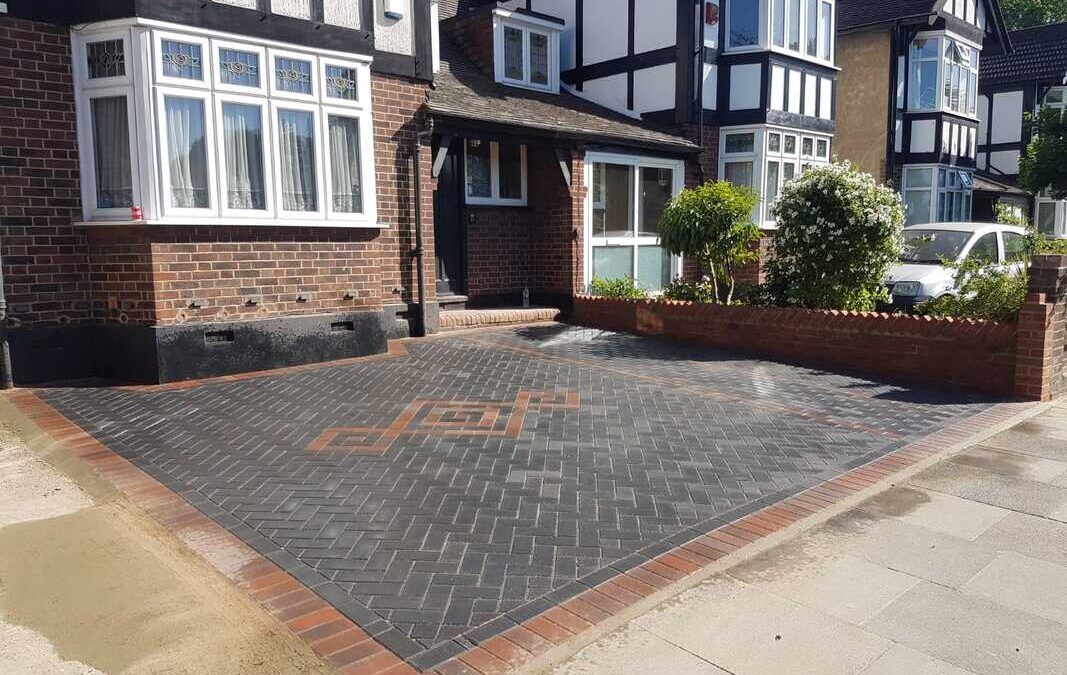
Slippery block paving is one of the most common winter complaints we hear from homeowners around Waltham Abbey, Cheshunt and Enfield. The good news is that it’s usually fixable without anything drastic. The bad news is that the most popular fix, blasting it with a pressure washer, can make the longer-term problem worse.
Why block paving turns slippery in winter
The slime is usually moss, algae or both, often with a layer of rotting leaves on top.
Marshalls’ paving aftercare guidance for its Stonemarket range notes that moss, mould, algae and lichen grow naturally on concrete and stone paving, and that growth is worse in shaded areas and where water ponds. In winter you get both: low sun, short days, and surfaces that rarely dry out.
The usual hotspots are:
- The side of the house that never gets sun
- Under trees and overhanging hedges
- Near downpipes or where gutters overflow
- Low spots where water sits after rain
- Joints where sand has washed out, leaving space for moss to root
A winter-safe cleaning routine
- Clear leaves and debris often.
Wet leaves are slippery on their own, and they keep the surface damp underneath. A stiff broom once or twice a week through autumn makes a real difference.
- Treat the green, then wait.
A moss and algae treatment suitable for block paving does much of the work for you. Follow the product’s instructions and give it time to work before rinsing.
- Wash gently.
If you use a pressure washer, use a wide fan nozzle, a moderate setting and keep the lance at a distance and angled away from the joints. Marshalls’ cleaning and maintenance guidelines say power washing is effective on moss and algae, and that the area should be inspected afterwards to make sure the joints are still full.
- Re-sand the joints once it’s dry.
Block paving relies on the sand in its joints to lock the blocks together. Manufacturer Thomas Armstrong points out that some jointing sand will be removed during cleaning and needs replacing by brushing new sand in once the paving has dried. Use kiln-dried sand; damp building sand won’t flow into the joints.
- Pick your day.
Avoid cleaning when frost is forecast. Water left in the joints and the surface of the blocks can freeze, and fresh sand won’t brush in while everything is wet.
For an immediate slip hazard
If a path or step is dangerously slippery right now and you can’t clean it properly yet:
- Sweep off leaves and loose growth
- Use grit or a little sand for traction on the worst patches
- Put a mat or temporary boards down on steps
- Light the area if it’s used after dark
Then plan a proper clean in the next dry spell.
Mistakes that make it worse
- Pressure washing too close. It strips the surface and blows out the joint sand, which leaves gaps for moss and weeds to colonise faster next time.
- Not re-sanding. Blocks without full joints can start to shift and rock under cars.
- Bleach and strong household chemicals. These can discolour block paving and harm nearby plants and lawns.
- Ignoring the cause. If a downpipe or overflowing gutter is soaking one corner, it will go green again within weeks.
When it’s more than a cleaning job
Sometimes slippery paving is a symptom. If water is always sitting in the same places, the levels or drainage may be the real problem; our post on what causes puddles on block paving explains why. Blocks that rock or have sunk need lifting and relaying, not just cleaning.
If it’s a patio rather than a driveway with failing joints, see our patio repointing guide.
Need it sorted before Christmas?
South East Block Paving installs, cleans, re-sands and repairs block paving around Waltham Abbey and the surrounding area, and handles driveway repairs where blocks have moved. For problems caused by water, our groundworks and drainage team can deal with the cause.
Get a free quote and we’ll tell you whether your driveway needs a clean and re-sand, or something more.
FAQs
Should I seal block paving to stop moss?
Sealing can make the surface easier to clean and help stabilise joint sand, but it needs warm, dry weather. Plan it for late spring or summer.
Can I put salt on block paving?
In icy weather, a light application of rock salt is generally acceptable on concrete block paving. Sweep away slush and excess afterwards, and keep salt off nearby plants.