
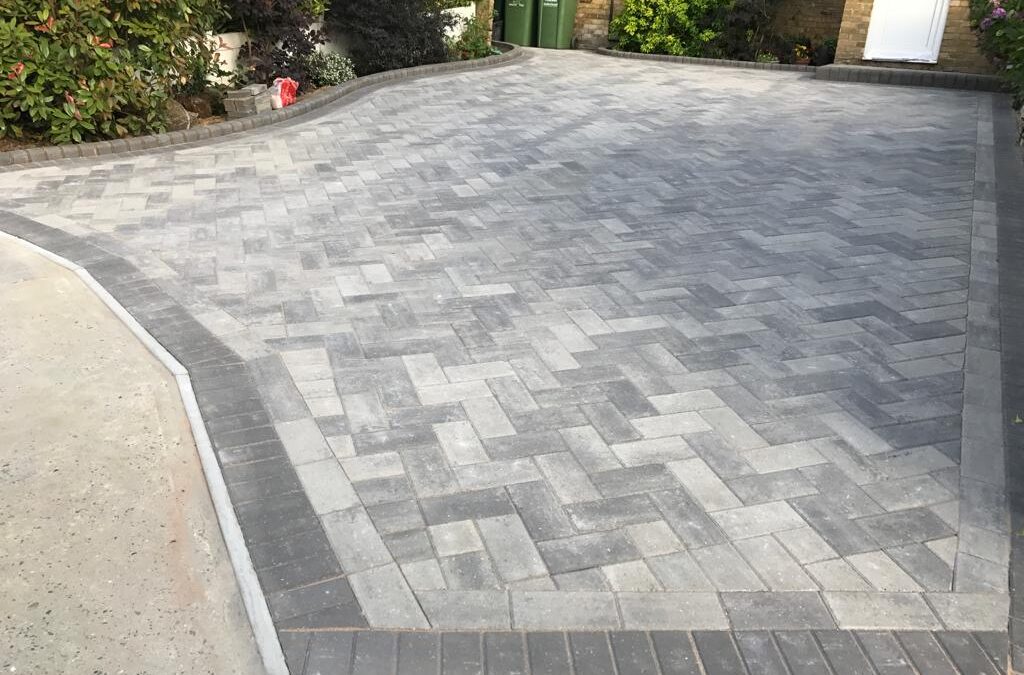
If you are planning a new driveway, block pavers for driveways are one of the most popular choices for UK homes — and for good reason. They look smart, suit both modern and traditional properties, and can be repaired in sections if a small area ever sinks or gets damaged.
But not all block paving driveways are the same. The final result depends on the type of block pavers you choose, the groundwork underneath, the drainage plan, and the skill of the installer.
This guide explains what homeowners should know before choosing block pavers for a driveway, including costs, design options, drainage rules, installation steps, and how to choose the right contractor.
At South East Block Paving Ltd, we provide professional block paving and driveway installation services in Waltham Abbey and surrounding areas.
TL;DR: Are block pavers good for driveways?
Yes — block pavers are a strong, attractive, and practical choice for driveways when installed properly.
They are popular because:
- they offer excellent kerb appeal
- they come in different colours, styles, and patterns
- individual blocks can be lifted and replaced
- they work well with borders, edging, steps, and landscaping
- permeable block paving options can help manage surface water
- they can last for many years with the right base and maintenance
The most important part is not just the block itself. It is the excavation, sub-base, compaction, edging, and drainage underneath.
What are block pavers?
Block pavers are individual paving units, usually made from concrete or clay, laid in a pattern to create a durable surface for vehicles and foot traffic.
For driveways, they are commonly used because the interlocking design spreads weight and allows small sections to be repaired without replacing the entire surface.
Common block paving styles include:
- rectangular concrete blocks
- clay pavers
- tumbled or aged-effect pavers
- charcoal, brindle, red, grey, or natural tones
- decorative borders and contrasting edges
For many homeowners, block pavers are the middle ground between practicality and appearance. They are stronger and more structured than loose gravel, more decorative than plain tarmac, and easier to repair in sections than a continuous resin or concrete surface.
Why choose block pavers for driveways?
1. They improve kerb appeal
A driveway is one of the first things people see when they arrive at your home. Block pavers can instantly make the front of a property look cleaner, smarter, and more organised.
For example, a simple charcoal border around a brindle driveway can frame the entrance nicely. On a newer property, grey block pavers can create a modern finish. On a traditional home, warmer red or autumn tones may blend better with brickwork.
This is where experienced block paving contractors can help you choose a style that suits the property, not just the latest trend.
2. They are practical for daily vehicle use
Driveways need to cope with parked cars, turning tyres, bins, deliveries, rain, frost, and regular foot traffic.
When installed with a proper sub-base and edge restraints, block paving is well suited to domestic driveways. It can handle everyday use while still looking more decorative than a plain surface.
A good installer will normally consider:
- vehicle weight
- turning areas
- slope and levels
- entrance width
- drainage direction
- how the driveway meets the pavement or road
This is why a professional survey matters before work begins.
3. Small areas can be repaired more easily
One of the biggest advantages of block pavers for driveways is repairability.
If a section sinks, becomes stained, or needs access underneath for a service repair, individual blocks can often be lifted and re-laid. This is different from surfaces like concrete or resin, where patch repairs can be more noticeable.
For homeowners, this can make block paving a sensible long-term choice.
If your current driveway has sunken blocks or uneven areas, you may not always need a full replacement. A local contractor may be able to help with driveway repairs depending on the condition of the base.
The honest part: block paving only works well if the base is right
A block paved driveway can look perfect on day one and still fail later if the groundwork is poor.
Most long-term problems come from:
- shallow excavation
- weak or poorly compacted sub-base
- poor drainage
- no proper edging
- laying over unstable ground
- rushed installation
A driveway is like a small construction project. The finished blocks are only the final layer.
As a practical trade-style reminder:
“A good block paved driveway is built from the ground up. If the base and drainage are right, the surface has a much better chance of staying level and looking smart.”
This is the type of thinking homeowners should look for when comparing quotes.
Drainage and planning: what UK homeowners should know
Drainage is one of the most important parts of any driveway installation.
In England, if you are creating or replacing a front driveway, planning rules may apply. According to GOV.UK guidance on permeable surfacing, you will not usually need planning permission if the surface is permeable, such as permeable concrete block paving, or if rainwater is directed to a lawn or border to drain naturally.
However, if the area is more than 5 square metres and you use a traditional impermeable surface without directing water to a permeable area, planning permission may be required.
What this means in plain English:
- water should not simply run onto the pavement or road
- water should not be directed towards the house
- drainage should be planned before installation
- permeable block paving may be worth considering for some properties
- channel drains or soakaway solutions may be needed in certain cases
If your existing driveway puddles after rain, mention it during the site survey. It may be a levels or drainage issue, not just a surface issue.
How much do block pavers for driveways cost in the UK?
Costs vary depending on size, access, excavation, waste removal, drainage, block type, pattern, and edging.
As a broad UK guide, Checkatrade’s driveway paving cost data suggests that a block paved driveway in 2026 can average around £90–£130 per m², with a typical double driveway often around £5,500.
You can view the cost guide here: Checkatrade block paving driveway cost guide.
Online cost guides are useful for budgeting, but they are not a substitute for a proper quote. A 40m² driveway with easy access and good existing levels will usually be very different from a 40m² driveway with old concrete, poor drainage, tree roots, or awkward access.
A proper quote should explain what is included, not just give one total price.
What should be included in a block paving driveway quote?
When comparing quotes for block pavers for driveways, ask whether the price includes:
- site preparation
- removal of old driveway or surface
- excavation
- waste disposal
- suitable sub-base
- compaction
- bedding layer
- edge restraints
- drainage solution
- block type, colour, and pattern
- manhole cover adjustments if needed
- jointing sand
- final clean-up
If a quote is much cheaper than the others, check what has been left out. Sometimes a cheaper quote excludes waste removal, drainage work, proper edging, or adequate base preparation.
Best block paving patterns for driveways
The laying pattern affects both appearance and performance.
Herringbone pattern
Herringbone is one of the most commonly recommended patterns for driveways because it gives strong interlock. It is especially useful where cars turn, brake, or reverse regularly.
Stretcher bond
This is a clean, simple pattern. It can work well on paths and light-use areas, but for driveways, the installer should advise whether it suits the layout and vehicle movement.
Basketweave
Basketweave has a more traditional look. It can be attractive, but again, the suitability depends on driveway use and design.
Borders and edging
A contrasting border can make a driveway look more finished. It also helps define the space and can tie in with walls, steps, paths, or landscaping.
For a more complete front garden upgrade, block paving can also be combined with landscaping, garden walls and steps, or fencing.
Block paving vs other driveway surfaces
Block pavers are not the only option, so it helps to compare them honestly.
Block paving vs resin bound
Resin bound gives a smooth, modern finish with lower day-to-day maintenance. Block paving gives more pattern choice and easier section repairs.
Block paving vs tarmac
Tarmac driveways are practical and often cost-effective for larger areas. Block paving gives a more decorative look and more design flexibility.
Block paving vs gravel
Gravel driveways can be more budget-friendly and naturally permeable. Block paving is neater, more structured, and easier to walk or wheel bins across.
The best choice depends on your budget, property style, drainage, and how much maintenance you are happy to do.
Maintenance tips for block paved driveways
Block paving is not difficult to maintain, but it does need basic care.
To keep it looking good:
- brush the surface regularly
- remove leaves and debris
- treat weeds early
- top up jointing sand when needed
- clean oil stains quickly
- avoid blasting out joint sand with aggressive pressure washing
- re-sand joints after heavy cleaning
Sealing can help some driveways, but it should not be rushed. Pavingexpert advises that sealants should not normally be applied to very new paving before the surface has settled and efflorescence has weathered out. You can read more here: Pavingexpert sealant guidance.
Why choose local block paving contractors in Waltham Abbey?
Local experience matters because every driveway is slightly different. A contractor working regularly in Waltham Abbey and nearby areas will be used to local property styles, access issues, typical front garden layouts, and the practical challenges of UK weather.
South East Block Paving Ltd has over 20 years of experience in driveways, block paving, patios, resin bound surfaces, tarmac, gravel, landscaping, fencing, and general outdoor improvements.
That matters because a driveway often connects to other parts of the property — steps, paths, garden edges, walls, gates, drainage, and landscaping. Having one experienced team look at the whole area can lead to a neater and more practical result.
See the main Block Paving page to learn more about local services.
FAQs about block pavers for driveways
Are block pavers good for driveways?
Yes. Block pavers are a strong and attractive option for driveways when installed on a proper sub-base with good drainage and edge restraints.
How long do block paving driveways last?
A well-installed block paved driveway can last for many years. Lifespan depends on the quality of the groundwork, drainage, traffic, maintenance, and materials used.
Is block paving better than tarmac?
Block paving is usually more decorative and easier to repair in sections. Tarmac is often simpler and more practical for larger areas. The better choice depends on your budget and preferred finish.
Do block paved driveways need planning permission?
Not always. If the surface is permeable or rainwater drains to a permeable area, planning permission is usually not needed. If you install more than 5m² of impermeable surfacing without suitable drainage, permission may be required.
Do weeds grow through block paving?
Weeds usually grow from seeds landing in the joints, not from underneath the driveway. Regular brushing, joint maintenance, and early weed treatment can help.
Can sunken block paving be repaired?
Yes, in many cases. One benefit of block paving is that individual sections can often be lifted, the base corrected, and the blocks re-laid.
Final thoughts: are block pavers right for your driveway?
Block pavers for driveways are a strong choice if you want a driveway that is attractive, practical, and repairable. They suit many UK homes and offer plenty of design flexibility.
But the quality of the installation matters more than the colour of the blocks. Before choosing a contractor, ask about the base, drainage, edging, and what is included in the quote.
For homeowners in Waltham Abbey and surrounding areas, South East Block Paving Ltd provides professional block paving and driveway services built around proper preparation, practical advice, and a clean finish.
To discuss your project, visit the Block Paving page or request advice through the Contact Us page.