
Choosing a driveway surface sounds simple… until you start comparing quotes and realise each option behaves differently in real UK weather.
If you’re deciding between resin bound, tarmac, and gravel, this guide will help you pick the right surface based on budget, drainage rules, maintenance, and how you actually use your driveway.
South East Block Paving Ltd installs driveways in Waltham Abbey and nearby areas, including resin bound and tarmac driveways, so we’ll keep this practical and homeowner-friendly.
First: do drainage/planning rules affect your choice?
For front driveways in England, the key rule is:
- You won’t usually need planning permission if your driveway uses permeable surfacing (e.g., gravel, permeable blocks, porous asphalt) or if rainwater is directed to a lawn/border to drain naturally.
- If the area is over 5m² and you use a traditional impermeable surface without providing for runoff to a permeable area, planning permission may be needed.
What this means:
If drainage is tricky (water currently pools, slopes toward the house, or the driveway is large), a permeable option like gravel or a correctly built resin bound system can make life easier — but only if installed properly.
Quick comparison
Resin bound Best for: kerb appeal + low maintenance + (often) permeability Watch outs: needs the right base + dry conditions to install well Tarmac (standard) Best for: cost-effective, durable, quick install, clean look Watch outs: standard tarmac is typically not permeable (porous asphalt is a different spec) so drainage must be planned Gravel Best for: budget + permeability + traditional look Watch outs: needs raking/top-ups, can migrate, wheel tracks happenCost guide
Prices vary by access, excavation, waste removal, edges, and drainage work — but these figures help you compare.- Resin bound: around £120/m² in some 2026 cost guides, but other guides show ~£60–£95/m² depending on spec and prep.
- Tarmac: commonly shown around £90/m² in cost guides, while some installers quote £45–£70/m² for certain machine-lay jobs (scope varies).
- Gravel: often around £60/m² in broad guides; detailed breakdowns for pro installs can land roughly £49–£92/m² depending on edging, membrane, labour, and stone choice.
- Resin bound: £3,000–£6,000
- Tarmac: £2,250–£4,500
- Gravel: £2,450–£4,600
Resin bound driveways: who should choose it?
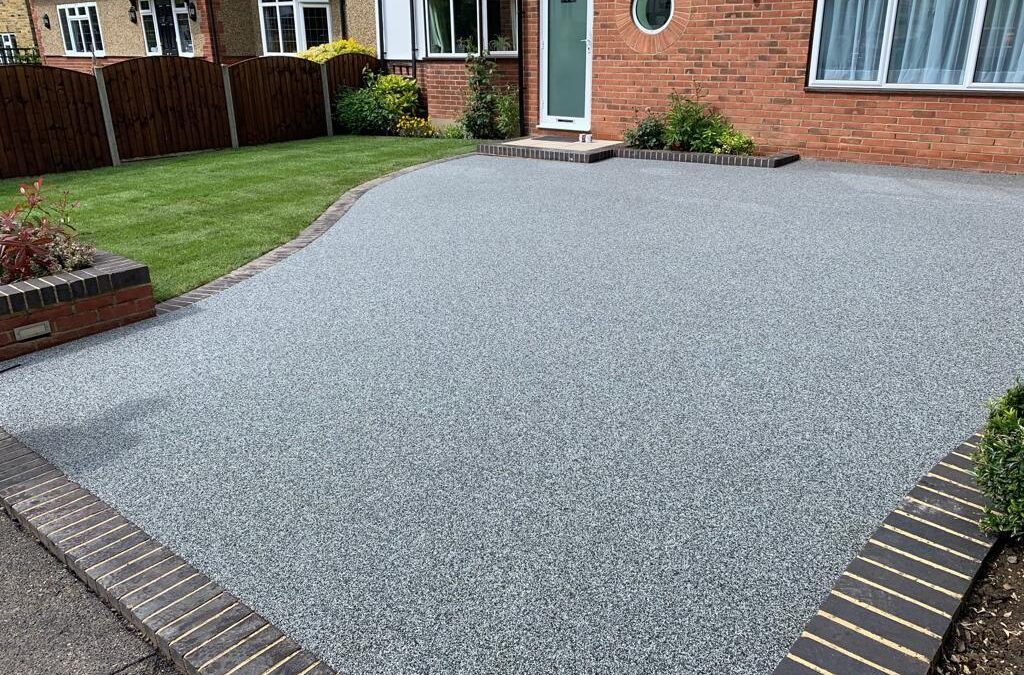
Resin bound is the “smooth stone” finish people love because it looks modern, feels neat underfoot, and doesn’t have loose stones like gravel. Pros- Often permeable (when installed correctly on the right base), which can help with drainage compliance.
- Low day-to-day maintenance (usually sweeping + occasional wash).
- Great kerb appeal — especially for upgraded entrances.
- Must be installed properly; resin bound is sensitive to moisture during curing and needs the right conditions and preparation.
- Make sure you’re getting resin bound, not resin bonded (bonded systems are different and commonly not permeable).
- You want a clean, premium look with less upkeep than gravel
- Your driveway drainage is a concern and you want a permeable solution
- You’re happy paying more for aesthetics and finish quality
Tarmac driveways: who should choose it?
Tarmac is popular because it’s practical and tidy — especially for larger driveways. Pros- Often cost-effective for bigger areas
- Durable and fast to install
- Easy to keep clean and simple to repair in many cases
- Standard tarmac is typically impermeable, so drainage and falls matter (or you’ll get puddles and runoff issues).
- Edging detail matters — without good edging it can look unfinished
- You want a strong, clean driveway without “fancy patterns”
- Budget matters but you still want a professional, long-lasting finish
- You need a practical surface for regular vehicle use
Gravel driveways: who should choose it?
Gravel is one of the most common “front garden” driveway solutions because it’s permeable and usually lower cost. Pros- Permeable, which helps with runoff and often avoids planning permission issues when done correctly.
- Typically budget-friendly
- Works well for traditional homes and rural/period looks
- Requires ongoing maintenance (raking, weeding control, and occasional top-ups)
- Stones can travel onto the pavement/into the road without proper edging
- Wheel tracks can form if the base isn’t built well
Maintenance reality check
A well-installed gravel driveway may need a top-up roughly every 3–5 years, and high-traffic drives may need it more often. Best for you if…- You want a permeable driveway and you don’t mind light maintenance
- You like the traditional gravel look
- You want a driveway that’s easier to adjust/extend later
How to choose in 60 seconds (simple decision guide)
Choose Resin bound if you want:- the best kerb appeal + a neat, low-maintenance surface
- a permeable option (when built correctly)
- a durable, tidy driveway that’s great value on larger areas
- a straightforward surface (but ensure drainage is designed properly)
- maximum permeability + a lower upfront cost
- and you’re OK with occasional raking/top-ups
7 questions to ask any driveway contractor
- Where will rainwater go in heavy downpours? (falls/drainage plan)
- How deep will you excavate and what sub-base will you install?
- How will edges be restrained (especially gravel and block borders)?
- Is waste removal included?
- For resin: is it resin bound and what base system will you use?
- For tarmac: how will you prevent puddling/runoff?
- What aftercare do you recommend for the first 6–12 months?